Firearm Safety & Statistics Resource Guide

Explore practical guidance, videos, statistics, and trusted resources for safer firearm storage and injury prevention

Safe Storage Resources

Below, you’ll find free gun lock information, educational and downloadable materials, step-by-step cable lock demonstrations for handguns and rifles, and a link to our YouTube channel for additional firearm safety videos.

Help keep firearms securely stored and out of the wrong hands. Request your free gun lock below.

Request A Free Gun Lock

Browse our graphic novel, lesson plans, and safety resources for educators, families, and communities.

Explore Educational Materials

Access printable firearm safety materials, including the Save the Day, Lock It Away graphic novel and related resources.

Downloadable Resources

Safe Storage Practices

Safe firearm storage starts with simple, consistent habits. When firearms are not in use, they should be locked, unloaded, and stored separately from ammunition to help prevent unauthorized access and reduce the risk of accidents.
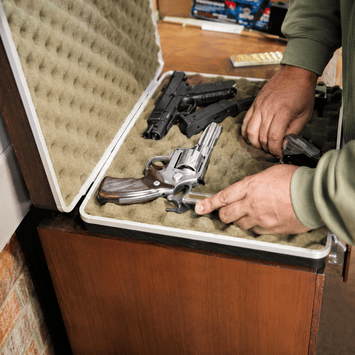
Firearm secured with a cable lock for safe storage

Store Firearms Locked

Use a cable lock, lock box, or firearm safe

Unloaded firearm stored safely when not in use

Store Firearms Unloaded

Keep firearms unloaded when not in use
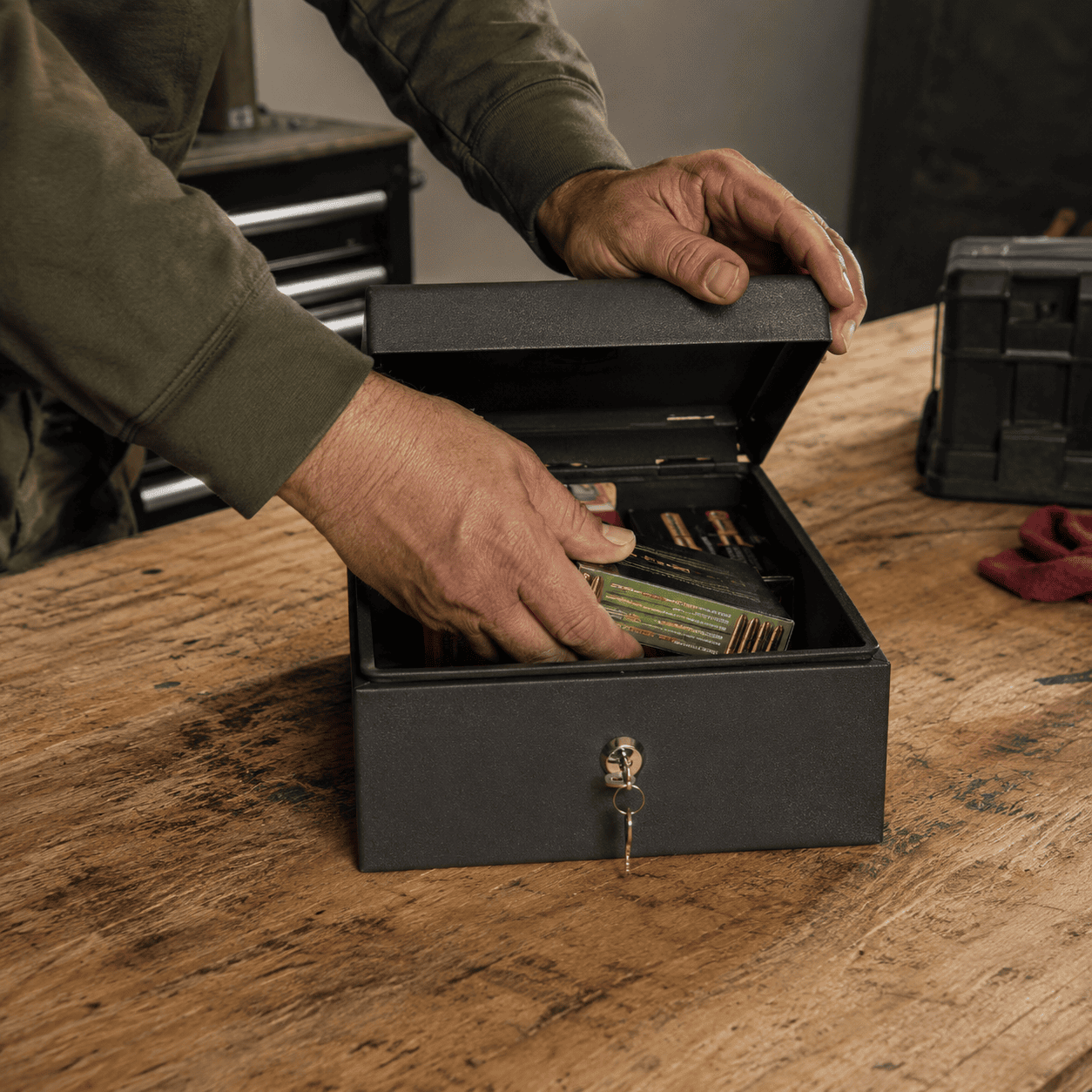
Ammunition stored locked and separately from firearms

Store Ammunition Separately

Keep ammunition locked and separate from firearms

Why Firearm Safety Matters
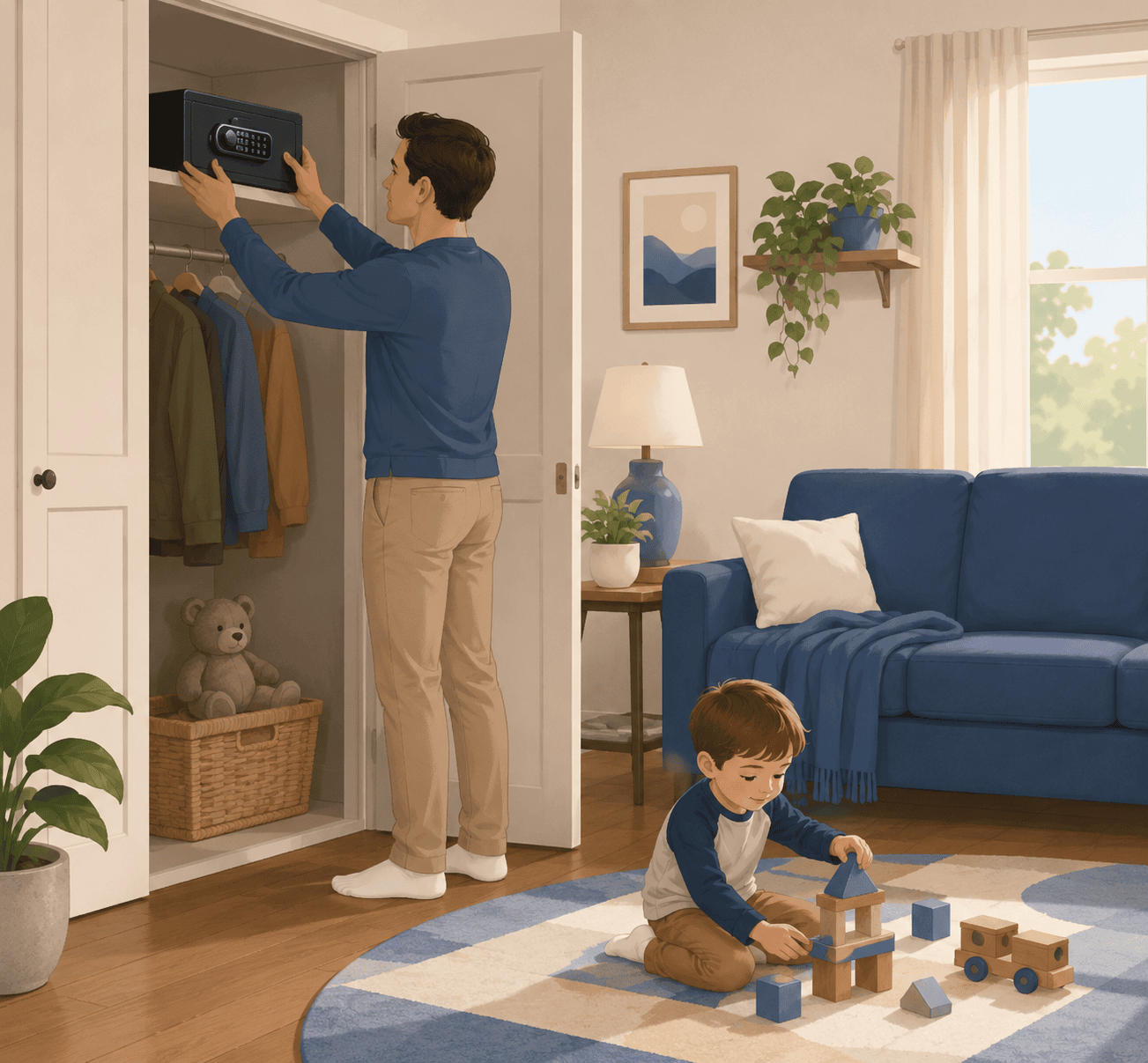
Parent placing a locked firearm safe out of reach of a preschool child

Preschool Children

Young children are naturally curious and often explore places adults may not expect. Even when a firearm is hidden, children may still know where it is stored.

Key safety concerns:

• Curious children may search drawers, closets, bags, and other storage areas.

• Many children know where firearms are kept in the home.

• Small children may have enough hand strength to pull a trigger.

• Gun safety lessons alone are not enough for young children.

• Preschool children may not fully understand death or the real danger of firearms.


Safe storage takeaway:


Firearms should be locked, unloaded, and inaccessible to children at all times.
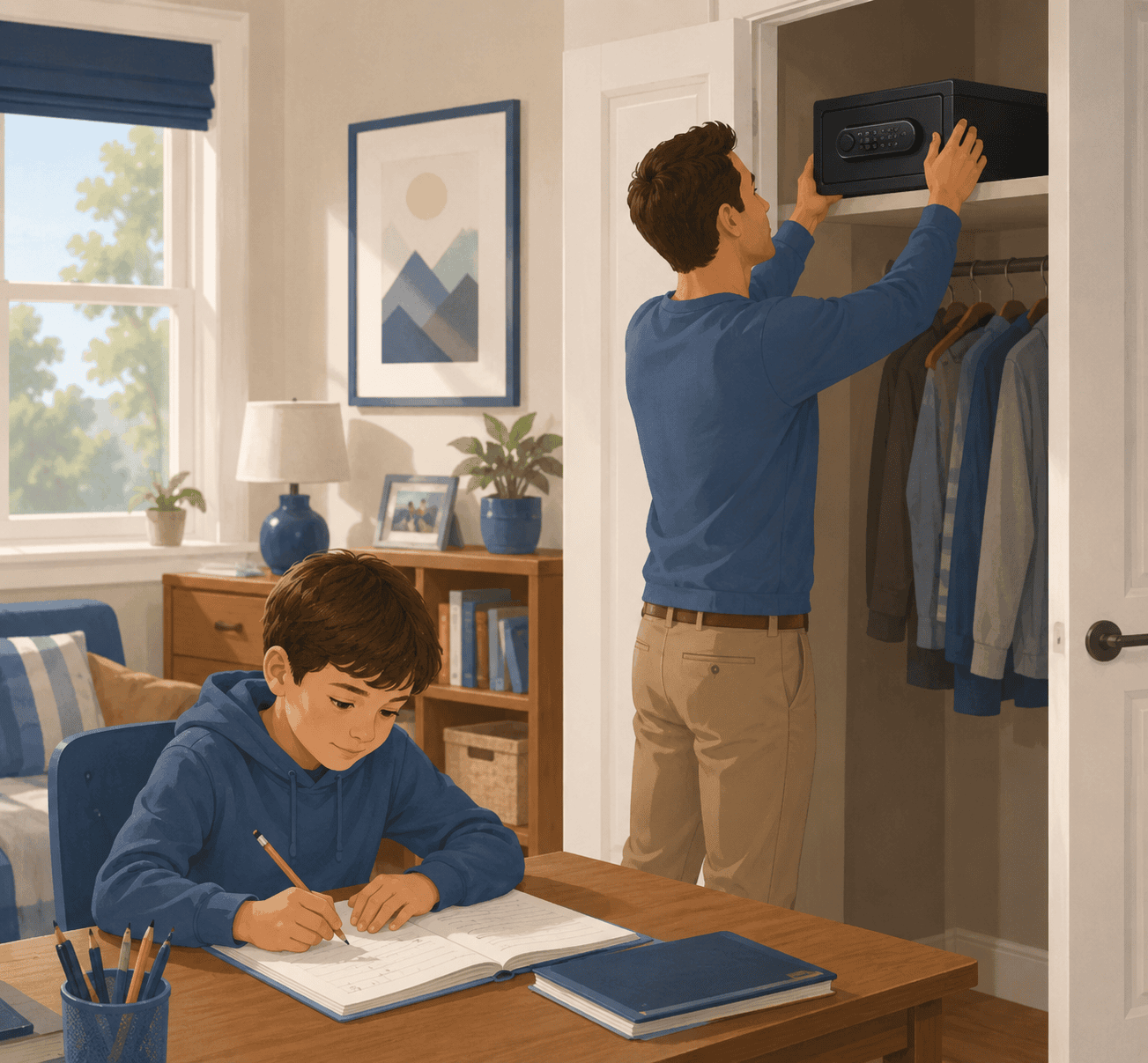
Parent securing a firearm safe while a school-age child studies nearby

School-Age Children

School-age children may understand basic safety rules, but they can still make risky decisions when unsupervised.

Key safety concerns:

• Children may touch or handle a firearm even if they have been taught not to.

• Peer pressure can lead to unsafe choices.

• Children may struggle to tell the difference between real firearms and toy guns.

• Risk-taking behavior increases when children are with friends.

• An unsecured firearm can quickly turn curiosity into danger.


Safe storage takeaway:


Do not rely on hiding a firearm or verbal warnings. Use secure storage every time.
Pregnant woman placing a locked firearm safe out of reach in a nursery

Pregnant and Recently Pregnant Women

Pregnant and recently pregnant women can face increased risk of violence, including firearm-related violence.

Key safety concerns:

• Women who are pregnant or within a year of giving birth may face higher risk of homicide by an intimate partner.

• Firearms in the home can increase the danger during moments of crisis or conflict.

• Extra care should be taken when there is a pregnant or recently pregnant person in the home.

• Secure storage can help reduce access during high-risk situations.


Safe storage takeaway:


When a household is under stress, secure firearm storage is one more step that can help protect everyone in the home.
Gun owner reviewing firearm safety statistics beside a locked firearm safe

Additional Safety Statistics

Research continues to show that children often know more about firearm storage than adults may realize.

Important reminders:

• Many children in homes with firearms know where they are stored.

• Some children have handled firearms without a parent or caregiver knowing.

• In some unintentional child firearm deaths, the firearm was mistaken for a toy.

• Youth exposure to firearm injury is linked with trauma symptoms, substance use, and future injury risk.

• Secure storage can reduce access during moments of curiosity, conflict, or crisis.


Safe storage takeaway:


The safest firearm is one that is locked, unloaded, and stored separately from ammunition when not in use.

Suicide Prevention & Firearm Safety

When someone is in crisis, time and access matter. Secure firearm storage can create distance between a moment of crisis and a potentially irreversible action.


  • Suicide is a leading cause of death for young Americans
  • Many suicide attempts happen within minutes of the decision
  • Secure firearm storage is associated with lower suicide risk                                

Suicide prevention and firearm safety

The Numbers: National and State Statistics

  • The Small Arms Survey estimated that civilians in the United States held approximately 393 million firearms at the end of 2017.¹                             
  • About 32% of U.S. adults said they personally owned a firearm in 2023, while another 10% said someone else in their household owned one.²

  • In 2023, 276 Texas children and teens ages 1–17 died from firearm injuries.³
  • RAND estimated that an average of 37% of Texas households had a firearm from 2007 through 2016.⁴
  • Firearms were the leading cause of death among Texas children and teens ages 1–17 in 2023.³
  • In 2022, firearm injuries were the leading cause of death among U.S. children and teens ages 1–19.⁵
  • A research review found that youth exposure to firearm injury was linked to high rates of post-traumatic stress symptoms and future injury.⁶
  • A 2024 study estimated that the combined lifetime costs of firearm-related deaths and annual costs of nonfatal firearm injuries reached $493.2 billion in 2020.⁷
  • Research indicates that exposure to gun violence and violent crime can negatively affect students’ academic engagement, test scores, graduation rates, and educational attainment.⁸

Safe Storage Laws & Child Access Prevention

Child
A child is defined as a person younger than 17 years old.


Readily Dischargeable Firearm
A readily dischargeable firearm means a firearm that is loaded with ammunition, whether or not a round is in the chamber.


Secure
To secure a firearm means taking steps that a reasonable person would take to prevent a child from accessing a readily dischargeable firearm. Examples include placing it in a locked container or temporarily making it inoperable with a trigger lock or another method.


Why this matters
Understanding these definitions helps families and caregivers recognize what Texas law considers reasonable steps to prevent child access to firearms.


Class C Misdemeanor

A person may commit a Class C misdemeanor if a child gains access to a readily dischargeable firearm and the person acted with criminal negligence by failing to secure the firearm or by leaving it somewhere the person knew—or should have known—the child could access it. A Class C misdemeanor is punishable by a fine of up to $500.


Class A Misdemeanor
The offense becomes a Class A misdemeanor if the child discharges the firearm and causes death or serious bodily injury to the child or another person. A Class A misdemeanor may be punishable by up to one year in county jail, a fine of up to $4,000, or both.


Seven-Day Arrest Delay for Certain Family Members
An arrest may not be made before the seventh day after the offense if the person is a member of the child’s family and the child’s discharge of the firearm caused death or serious bodily injury to that child.


What CAP laws address
Child Access Prevention laws are intended to reduce children’s unauthorized access to firearms by establishing safe-storage requirements or penalties when a child gains access to an unsecured firearm.


Laws vary by state

CAP laws differ in their requirements, age limits, penalties, and enforcement. Some apply when a child could access an unsecured firearm, while others apply only after a child gains access or uses it.


Research and prevention
A 2026 RAND review concluded that available evidence supports CAP and safe-storage laws as measures that reduce fatal and nonfatal self-inflicted firearm injuries among youth, including unintentional injuries and suicide-related injuries. The review also found evidence that these laws reduce firearm homicides among youth.


Safe storage takeaway
When not in use, firearms should be stored locked and unloaded, with ammunition secured separately. Keeping a firearm merely out of sight or out of reach is not considered secure storage because children or other unauthorized people may still gain access.¹⁰

*This information is provided for general education and awareness. It is not legal advice.

Texas Education Code § 37.222


Texas Education Code §37.222 requires each school district and open-enrollment charter school to provide parents and guardians with safe firearm storage information and resources at least three times each school year. The information must address Texas Penal Code §46.13 and ways families can prevent children from accessing firearms.

View Texas Education Code §37.222

Texas Firearm Safety Tax Exemption (SB 313)

Texas Tax Code §151.3131 exempts qualifying firearm safety equipment from Texas sales and use tax. Eligible items include gun safes, lock boxes, barrel locks, trigger locks, firearm safety training manuals or electronic publications, and other products designed to support the safe handling or storage of firearms.

View Texas Firearm Safety Tax Exemption
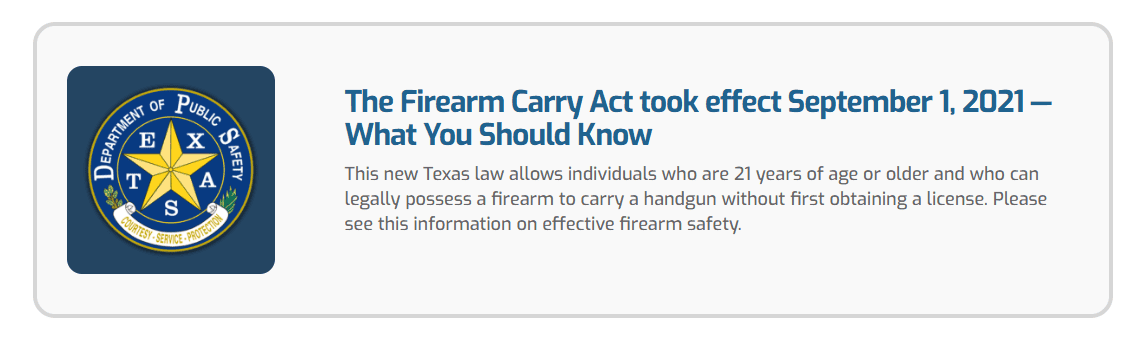
Texas Department of Public Safety information on the 2021 Firearm Carry Act

Trusted Resources

Explore trusted organizations offering firearm storage guidance, safety education, crisis support, veteran resources, and local training.